
Pharma & Life Sciences Consulting
Executive summary
Miebach helps pharmaceutical and life sciences companies design and implement resilient, compliant and efficient supply chains as well as intralogistics. We combine supply chain strategy, planning, logistics for inbound, manufacturing and outbound, facility and warehouse engineering, automation, digital solutions and implementation support to improve product availability, capacity, service, cost and operational performance.
Introduction
Pharma and life sciences supply chains must protect product quality and patient access while managing volatile demand, long lead times, constrained capacity, global dependencies and increasingly complex product portfolios. Biologics, personalized therapies and temperature-sensitive products add tighter handling, visibility and chain-of-custody requirements.
Disruptions in a pharma & life sciences supply chain can have heavy implications: delayed treatment, shortages, increased write-offs and costly expedited responses. The FDA reported that it worked with manufacturers to prevent 283 drug shortages in 2024, while quality issues, capacity constraints, natural disasters and facility shutdowns continued to strain supply.
Miebach has worked with 80% of the world’s top 20 pharmaceutical companies, providing broad experience across complex global supply chains and operating models. Miebach connects strategic decisions with executable designs: modeling networks and inventory, improving planning and material flow, engineering GMP/GDP-aligned facilities, selecting automation and technology, and supporting delivery through commissioning, ramp-up and stabilization.
80% of the world’s top 20 pharmaceutical companies are Miebach clients.
Industry Snapshot
Pharma supply chains are changing
Supply chains in the Pharma and life sciences industry must protect product quality and patient access – all while managing volatile demand, long lead times, constrained capacity, global dependencies and increasingly complex product portfolios. At the same time, changing regulation, demographic shifts and labor shortages are increasing the need for cost-efficient, modular and flexible supply chain and intralogistics solutions. Biologics, personalized therapies and temperature-sensitive products add further requirements for handling, visibility, traceability and chain of custody.
The overarching challenge is no longer simply to make supply chains in the pharma environment more efficient. Companies need to increase resilience and patient-service reliability while controlling cost, capacity and inventory without compromising quality or compliance.
Key trends + challenges for pharma supply chains
- Building Resilience and patient-service reliability
- Increasing the OEE through higher utilization of production lines
- Supply chain and inventory planning
- Automation and labor availability
- Compliant material flows and facilities
- Manufacturing and production logistics
- Cold chain and temperature-controlled logistics
- Digital visibility and control towers
- Flexible and scalable supply chain networks

1. Resilience, product availability and network risk
Concentrated sources, long qualification cycles and limited alternate capacity make disruptions difficult to absorb. Quality events, supplier failures, geopolitical shifts and severe weather can quickly become patient-service issues. The FDA reported 1,459 potential shortage situations from 151 manufacturers in 2024, reinforcing the need for earlier risk sensing, scenario planning and practical redundancy.

2. Demand uncertainty, capacity and inventory
Clinical outcomes, launches, tender wins, loss of exclusivity and changing treatment patterns make demand difficult to predict. At the same time, batch production, quality-release lead times and scarce capacity reduce flexibility. The consequence is often a costly mix of excess inventory, expiry risk, constrained products and reactive expediting.

3. Complex manufacturing and intralogistics
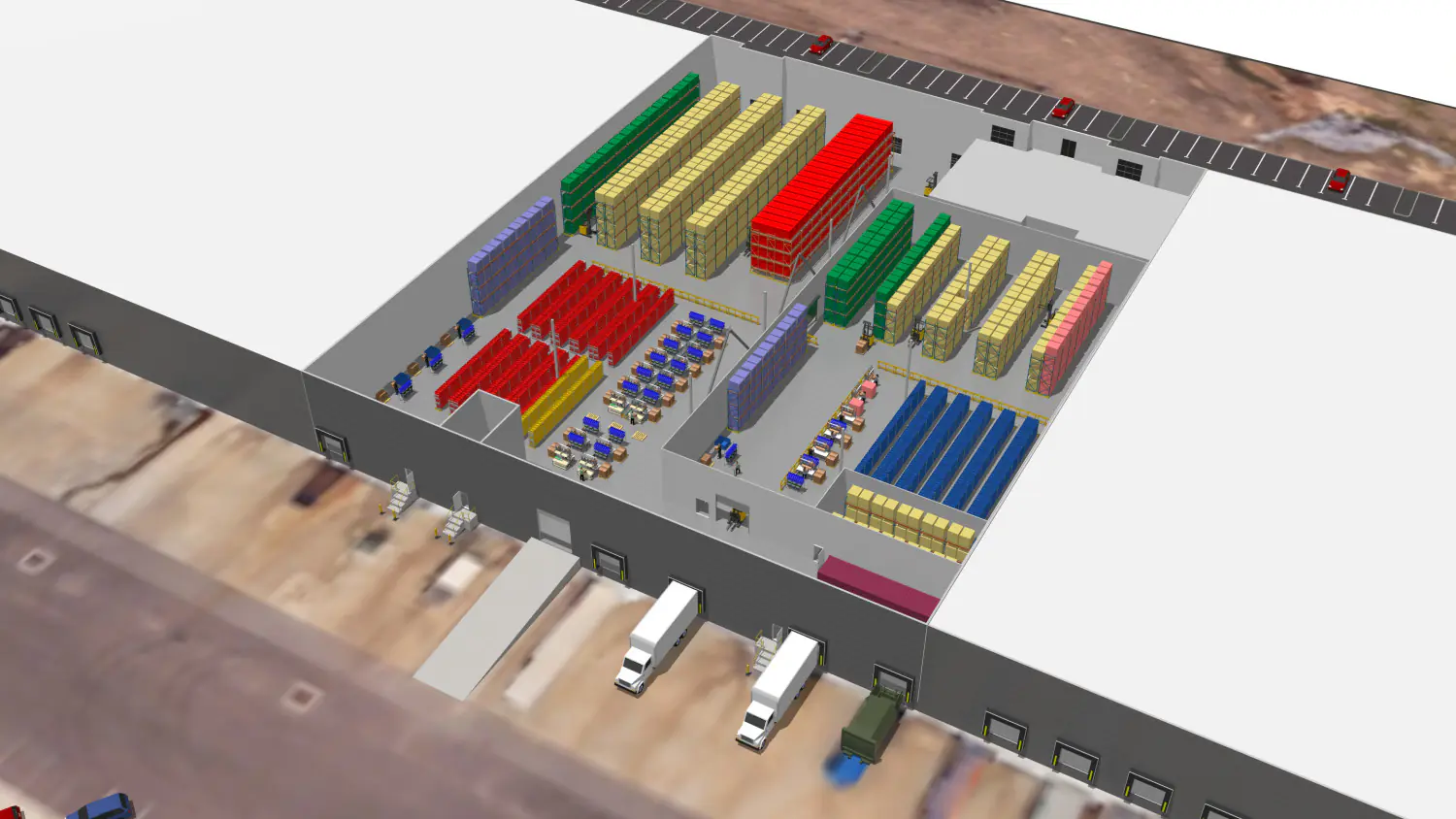
Pharma sites must coordinate raw materials, components, intermediates, samples, finished goods, returns and waste across controlled and segregated flows. Poor layout or process design creates excess travel, congestion, ergonomic risk and production delays. The challenge becomes more acute in brownfield expansions where space, utilities and ongoing operations constrain the solution.

4. Cold chain, product integrity and chain of custody
Biologics, vaccines and advanced therapies may require controlled, frozen or cryogenic conditions with little tolerance for delay or excursion. Every handoff must preserve product condition, identity and traceability. Good Manufacturing / Distribution Practice (GMP/GDP) expectations require medicines to remain in the correct storage conditions throughout transportation and support effective tracing and recall.

5. Regulatory compliance, serialization and data integrity
Supply-chain processes and systems must support GMP/GDP requirements, lot and batch traceability, quarantine and release status, controlled access, audit trails and recall readiness. In the US, DSCSA implementation requires interoperable electronic exchange of transaction data, increasing the importance of master-data quality and integration across trading partners.

6. Automation, digitalization and implementation risk
Companies want more real-time data, analytics, AI and automation, but technology alone does not create value. Weak process design, fragmented data, unclear requirements and limited change capacity can stall programs. Solutions must be fit for product and process constraints, validated where required, integrated with existing systems and adopted by operators.
The demographic development in western countries leads to significant labor shortage and results in an increased need for automation and a guidance through the jungle of developing new technologies - to sort the good from the bad. The vast and constantly growing number of technologies and suppliers makes selecting the right solution seem unmanageable.
Miebach has more than 50 years of automation expertise and provides vendor-neutral guidance from concept and business case through technology and supplier selection to implementation, commissioning and ramp-up.
Our focus includes:
- Automation strategy and guidance
- Brownfield automation
- Greenfield automation
- Emerging and next-generation technologies
- Technology and vendor evaluation
- Business-case development
- Implementation and ramp-up
The objective is not automation for its own sake. It is to create modular, scalable and operationally resilient solutions that fit products, processes, quality requirements and future demand.
Depending on project scope and baseline, Miebach projects can identify logistics cost savings in the range of 8–12%.
How Miebach supports Pharma & Life Sciences
Compliance by design
Pharmaceutical logistics operates within strict quality and regulatory environments. Miebach translates applicable requirements into practical process, layout, handling, storage, traceability, segregation and system requirements.
Depending on the operation and market, projects can address requirements including GMP, GDP, MDR and IVDD, working closely with clients' quality and validation teams.
Solutions can cover:
- Ambient storage
- Controlled-temperature storage
- Frozen and cryogenic flows
- Quarantine and release processes
- Monitoring requirements
- Traceability and segregation
- Picking and packing
- Distribution and 3PL strategy
Services/Capabilities
Resilience and network strategy
Our approach: Miebach helps supply-chain and operations leaders quantify vulnerabilities and design resilient sourcing, manufacturing and distribution networks.
- Supply-chain risk and criticality assessment
- Network optimization and scenario modeling
- Capacity, footprint and business-continuity strategies
- Inventory segmentation and postponement strategies
Impact: Clearer investment priorities, reduced single-point exposure, improved ability to maintain service during disruptions and typical cost-to-serve reductions of 10–20%.
Integrated planning, capacity and inventory
Our approach: Miebach redesigns planning and decision processes and supports the design, selection and implementation of Advanced Planning Systems (APS), accounting for the realities of batch manufacturing, quality release, shelf life and constrained resources.
- S&OP / IBP and governance redesign
- Demand, capacity and inventory modeling
- Planning-parameter and policy optimization
- APS strategy, process and solution design, requirements development, vendor selection and implementation
- Control-tower requirements and KPI design
Impact: Improved visibility and decision speed, 20–40% inventory and working-capital reduction while maintaining OTIF above 95%, and 30–50% faster planning cycles.
Manufacturing logistics and facility design
Our approach: Miebach engineers safe, compliant and efficient material flows for new facilities, expansions and operating sites.
- Material-flow and adjacency design
- Warehouse, production-supply and line-side concepts
- Digital-twin and discrete-event simulation
- Space, labor, equipment and throughput sizing
Impact: less handling and travel, improved flow and ergonomics, right-sized capacity and a design that can move into execution.
Warehousing, cold chain and distribution
Our approach: Miebach designs storage and distribution operations around product condition, service requirements and quality controls.
- Ambient, controlled-temperature, frozen and cryogenic concepts
- Slotting, picking, packing and replenishment design
- Temperature mapping and monitoring requirements
- 3PL strategy, distribution footprint and transport design
Impact: stronger product protection and traceability, improved throughput and service, and lower avoidable handling, freight and write-off exposure.
Automation and digital enablement
Our approach: Miebach independently defines, evaluates and integrates automation and digital solutions for operations teams.
- Automation feasibility and technology selection
- Vendor-neutral requirements and tendering
- WMS/WES/WCS, planning and data-integration concepts
- Analytics, digital twins, dashboards and AI use-case prioritization
Impact: an evidence-based business case, lower selection risk and technology aligned to real operational requirements.
Implementation through stabilization
Our approach: Miebach stays involved from concept through delivery so strategy and design intent translate into operating performance.
- Detailed design and tender support
- Program, vendor and interface management
- Testing, commissioning and operational-readiness support
- Ramp-up, training, change management and continuous improvement
Impact: improved schedule and interface control, faster issue resolution and a more stable transition into operations.
What problems does Miebach solve in Pharma & Life Sciences?
Miebach helps pharmaceutical and life sciences organizations answer three fundamental questions:
1) How can we increase resilience and patient-service reliability while controlling cost, capacity and inventory?
We model supply networks, capacity, inventory and disruption scenarios and translate the results into prioritized supply chain and resilience measures.
2) How can we design compliant and efficient material flows and facilities?
We combine process design, logistics engineering and applicable quality requirements to create implementable concepts for manufacturing, warehousing and distribution.
3) How do we select and implement automation, digital tools and operating models that work in practice?
We start with operational requirements rather than technology. Miebach evaluates alternatives independently and supports implementation through commissioning, ramp-up and stabilization.
Who Miebach supports in Pharma & Lifestyle
Our customers
Miebach supports organizations across Pharma, Life Sciences, Biotech, Medical Devices, Medical Products, Medical Technology, Laboratory, In Vitro Diagnostics, Vaccines, High-Tech Equipment and Special Nutrition through awarded end-to-end supply chain consulting excellence.
Our clients include:
- API producers
- Pharmaceutical manufacturers
- Formulation, Fill & Finish and packaging operations
- Contract Manufacturing Organizations (CMOs)
- Contract Development & Manufacturing Organizations (CDMOs)
- Clinical-trial organizations and operations
- Third-party logistics providers
- Wholesalers and pre-wholesalers
- Online pharmacies
- Suppliers and service providers
- EPCM companies
The Miebach Difference
From strategy to implementation
Miebach connects strategic supply chain decisions with executable designs.
Example:
Strategy → Planning → Network & Inventory → Manufacturing Logistics → Facility & Warehouse Design → Automation → Digital Solutions → Tendering → Implementation → Commissioning → Ramp-up → Continuous Improvement
Our end-to-end approach helps companies avoid the disconnect between a strategic recommendation and what can actually be implemented in a regulated operating environment.
Experience across global pharmaceutical supply chains

Industry Insights






Testimonials from Clients on Gartner Peer Insights
Below you find insights from clients who have worked with Miebach from Gartner Peer Insights™. For the full reviews, please click on each image.


Frequently asked questions (FAQ)
We support supply-chain strategy, network and inventory optimization, manufacturing logistics, facility and warehouse design, automation, planning transformation, digital enablement, tendering, implementation, ramp-up and continuous improvement.
Start by identifying supply, capacity and inventory vulnerabilities across suppliers, manufacturing and distribution. Scenario planning can then be used to evaluate disruption risks, redundancy options and mitigation measures. An integrated operating model helps turn this transparency into faster cross-functional decisions.
We translate applicable quality and regulatory requirements into process, layout, handling, storage, traceability, segregation and system requirements, working closely with the client's quality and validation teams.
We identify supply and capacity vulnerabilities, model disruption scenarios, evaluate redundancy options and develop prioritized resilience roadmaps across suppliers, manufacturing, inventory and distribution.
Integrated Business Planning (IBP) connects demand, supply, manufacturing, quality and finance. Miebach assesses planning maturity, redesigns processes and governance, defines relevant KPIs and policies, and supports the selection and implementation of appropriate planning technology.
Inventory can be optimized through segmentation, differentiated service policies, safety-stock optimization and better integration between demand, supply and production planning. The right target depends on product characteristics, service requirements, lead times, supply risk and the existing inventory baseline.
According to Miebach project experience, inventory optimization can identify opportunities for 20-40% working-capital reduction while maintaining OTIF above 95%. Actual results depend on the starting position, product portfolio, network, service requirements and project scope.
Production planning should synchronize capacity, material availability, production requirements and quality-release processes. Miebach connects planning with manufacturing logistics and operational constraints so that improvements remain executable within the applicable quality and regulatory environment.
Depending on customer requirements, Miebach supports projects involving platforms including SAP IBP, Kinaxis, o9 Solutions and Blue Yonder, as well as other planning technologies. Technology selection should follow business and process requirements rather than precede them.
End-to-end visibility requires more than a dashboard. Miebach helps define digital control towers, real-time exception management and the underlying data integration required to connect suppliers, manufacturing, logistics and planning decisions.
Yes. Miebach designs new sites and distribution operations and optimizes or expands existing facilities. Brownfield projects account for constraints including available space, utilities, ongoing operations, shutdown windows and existing technology.
We begin with products, volumes, processes, quality requirements and future scenarios. Based on these requirements, Miebach develops the concept and business case, evaluates suitable technologies and vendors, and can support detailed design, implementation, commissioning and ramp-up.
Yes. Miebach provides vendor-neutral consulting and engineering. Technologies, suppliers and operating models are evaluated based on operational fit, performance, risk, scalability and total cost.
Yes. Projects can include ambient and controlled-temperature storage, frozen and cryogenic flows, quarantine and release processes, monitoring requirements, picking and packing, distribution and third-party logistics strategy.
Yes. Miebach can design patient- and product-specific flows that account for tight lead times, temperature control, chain of identity, chain of custody, capacity constraints and coordination between manufacturing and care sites.
We first align on the business problem, products and service requirements, regulatory context, decisions to be made, available data and implementation horizon. From there, we define a right-sized diagnostic, design or delivery scope.
Yes. Miebach can support detailed design, tendering, vendor coordination, testing, commissioning, operational readiness, training, ramp-up and performance stabilization.
Results depend on scope and baseline. Typical objectives include improved service and resilience, right-sized capacity and inventory, lower logistics and handling effort, stronger compliance-by-design and reduced implementation risk.
Yes. We assess planning maturity, redesign processes and governance, model inventory and capacity policies, define KPIs and technology requirements, and support implementation and adoption.
Especially when it comes to line change overs and line clearances, then plant logistics can help to improve the OEE of each production line, this means that one line does not have to wait after clearing for the next supply to arrive, but that logistics enables the production to start immediately after the clearances are given. This can be ensured by arranging sufficient buffers in front of the lines, while still following all GMP rules, and avoiding any cross contamination or mixing up of different materials.
Outcomes vary by scope, but commonly include improved service and resilience, right-sized capacity and inventory, lower handling and logistics effort, stronger compliance-by-design and reduced implementation risk.
Build a resilient, scalable pharma supply chain
Whether you are redesigning a global supply chain network, improving planning, expanding an existing facility or evaluating the next generation of warehouse automation, Miebach connects strategy, engineering and implementation.
Talk to our Pharma & Life Sciences experts about your supply chain challenge.
Contact us


Global contact
Cate Davis
Global Lead Pharma & Life Sciences | Business Development Leader, North America
Miebach Insights